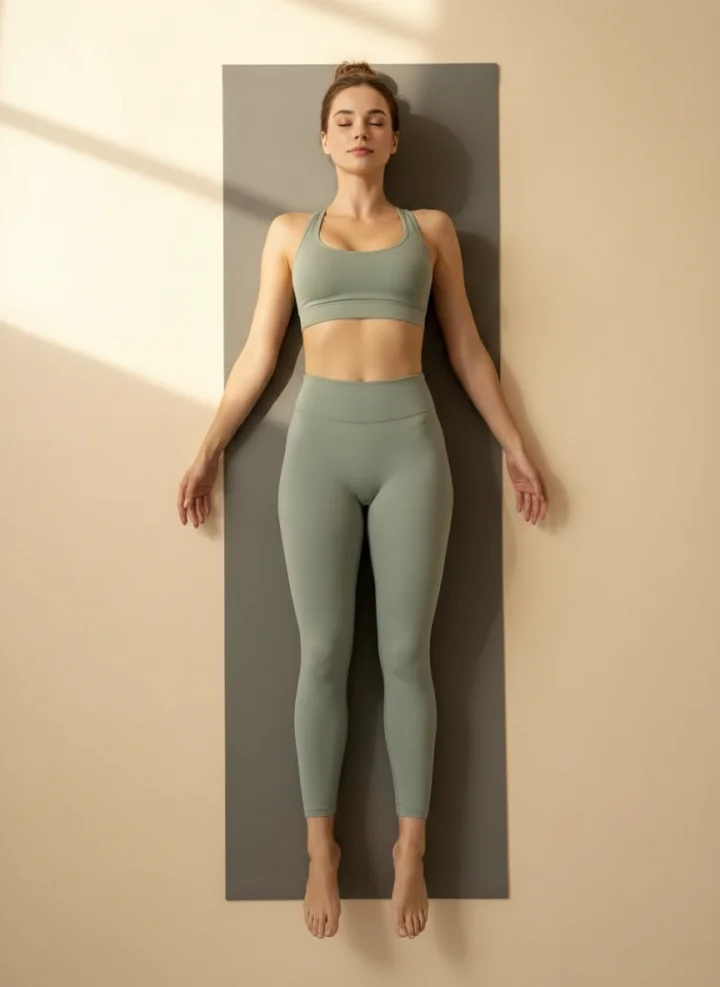
Restorative yoga uses props to fully support the body in a small number of passive poses held for extended periods — the opposite approach from an active, flowing yoga class.
Fewer poses, much longer holds
Where an active class might move through dozens of poses in an hour, a restorative session might use just 3-5 poses, each held for several minutes with full physical support from props.
The role of props
Bolsters, blankets, and blocks fully support the body's weight, allowing muscles to release completely rather than actively engaging to hold a shape — this passive support is the defining feature of the style.
Why it suits back pain specifically
Because there's minimal active muscular effort involved, restorative yoga is accessible even during flare-ups or on days when a more active practice would feel like too much.
What if you don't have yoga props at home?
Household substitutes work fine — a rolled blanket or firm pillow in place of a bolster, and books in place of blocks — the exact prop matters less than providing genuine, stable support.