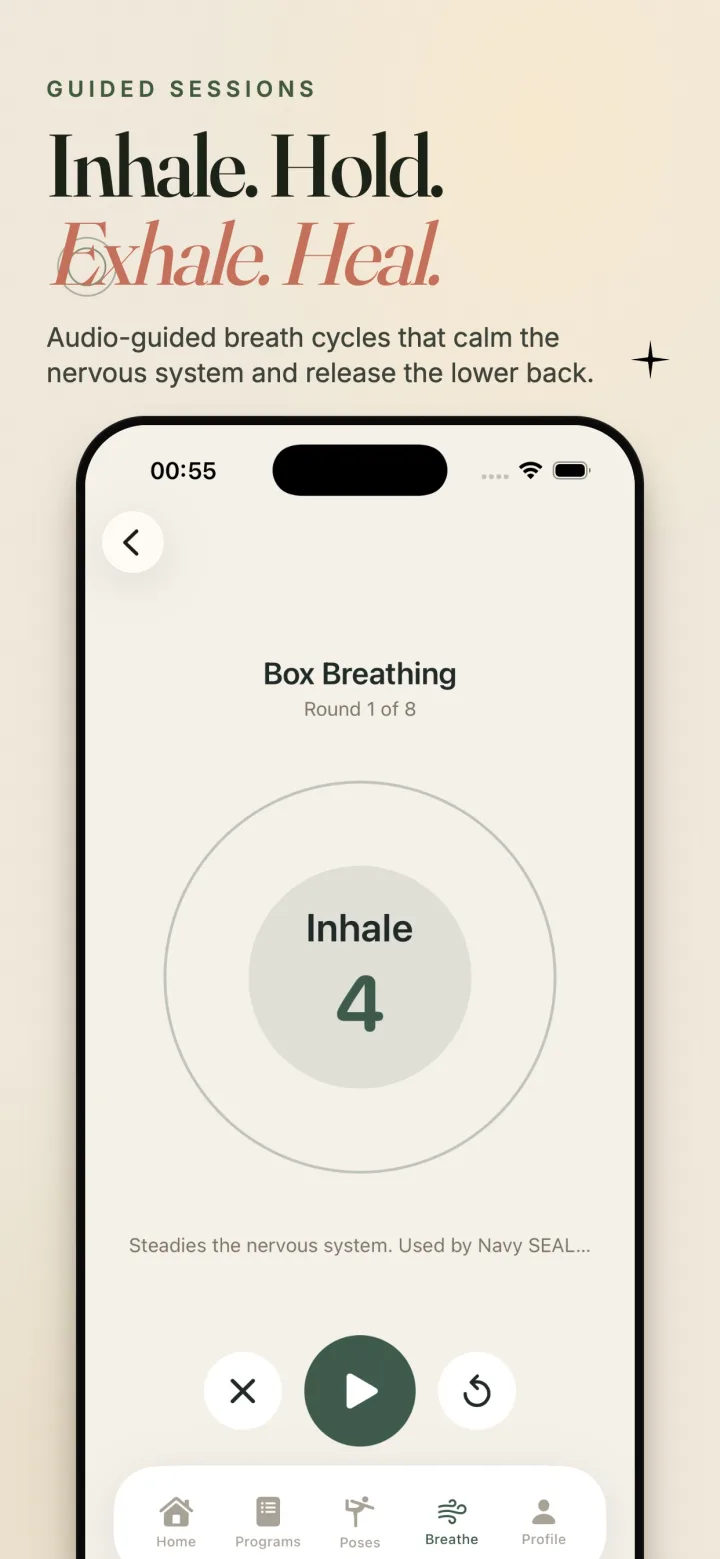
Breathing exercises don't work like a painkiller, but there's a genuine, researched mechanism by which they can meaningfully change how pain is experienced.
The nervous system connection
Slow, controlled breathing shifts the balance away from the sympathetic ('fight or flight') nervous system toward the parasympathetic system, which is associated with reduced muscle tension and a lower overall stress-pain feedback loop.
What the research actually shows
Studies on breath-based interventions, including a Cochrane review on breathing exercises, generally support meaningful benefits for stress and certain physical symptoms, though breathing alone isn't positioned as a standalone cure for structural pain causes.
Realistic expectations
Breathing exercises are best understood as one genuinely useful tool among several — most effective when combined with movement-based approaches like gentle yoga, not as a substitute for addressing the physical side of back pain.
Should breathing exercises replace physical stretching for back pain?
No — they're complementary. Physical poses address muscular and structural factors directly, while breathing exercises address the stress and nervous-system side; combining both is more effective than relying on either alone.