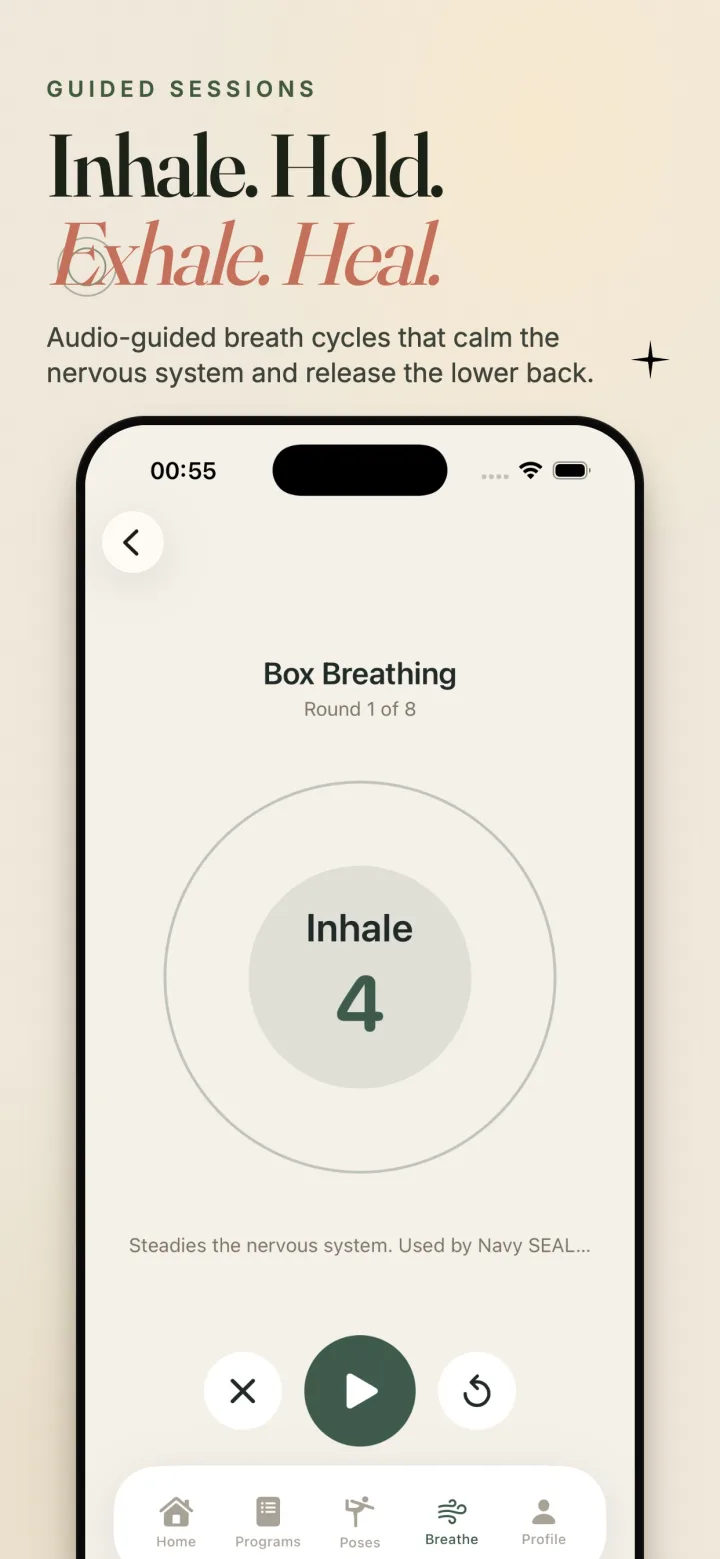
The 4-7-8 breath — inhale for 4, hold for 7, exhale for 8 — is built around one key idea: a long, extended exhale is one of the fastest ways to signal calm to the nervous system.
Why the exhale is longer than the inhale
Exhaling activates the parasympathetic nervous system more strongly than inhaling does — deliberately extending the exhale beyond the inhale is a common technique across many breathing practices specifically to lean into that calming effect.
What the hold does
The 7-second hold between inhale and exhale adds a brief pause that some practitioners find intensifies the settling effect, though the core mechanism is really the extended exhale that follows.
Why it's associated with sleep
Because of its strong calming effect, 4-7-8 breathing is commonly recommended as a pre-sleep practice — a few rounds while lying in bed is a low-effort way to wind down before rest.
Is it normal to feel lightheaded doing 4-7-8 breathing?
Mild lightheadedness can happen when first learning breath-holding patterns — if it happens, breathe normally for a moment and try shorter counts, easing into the full pattern gradually rather than starting at full length.